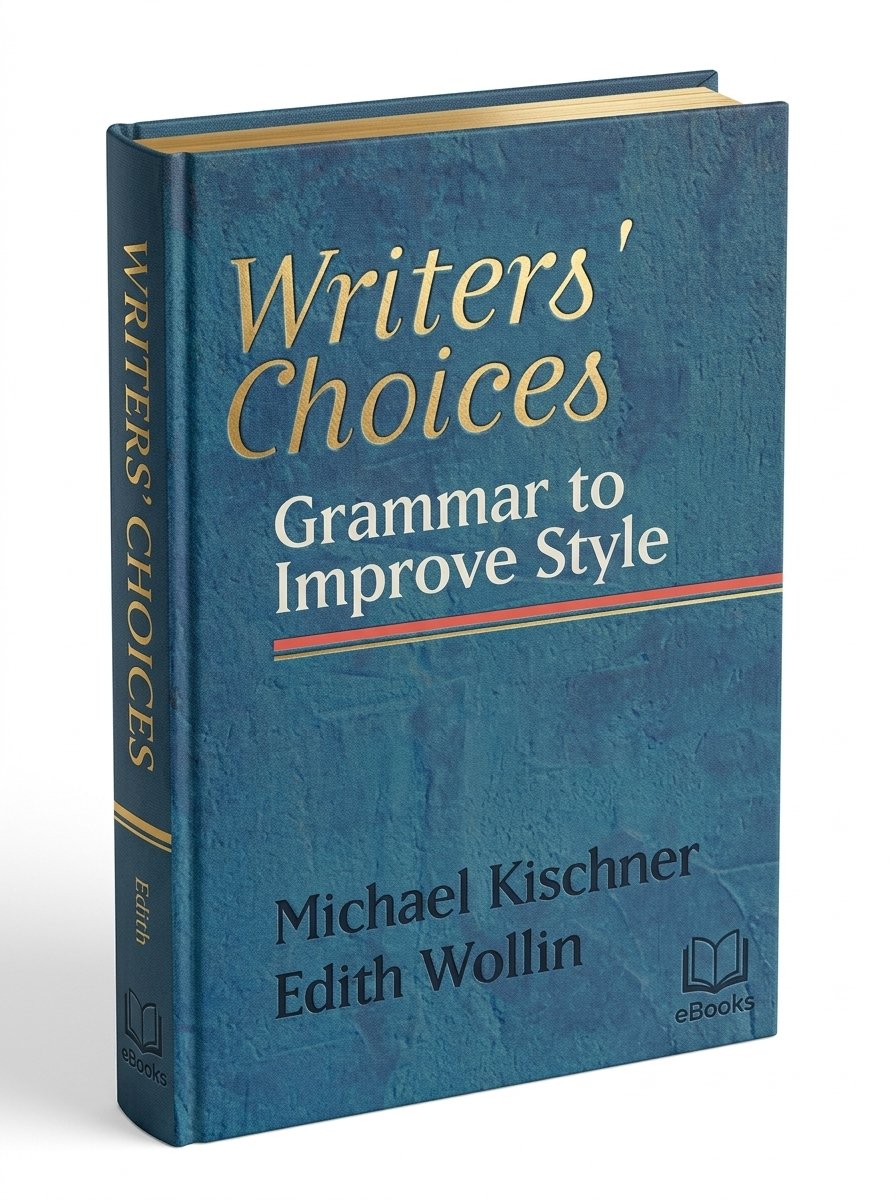
Style isn’t just what you say—it’s how you say it. Writers’ Choices Grammar to Improve Style focuses on deliberate syntactic decisions that elevate clarity, rhythm, and tone. By mastering grammatical options, writers transform flat prose into compelling narratives. Below, five key strategies show how conscious grammar choices refine your unique voice.
Writers’ Choices Grammar to Improve Style Through Sentence Variety
Monotonous sentence structures bore readers. Writers’ Choices Grammar to Improve Style begins with mixing simple, compound, and complex sentences. A short declarative sentence creates punch; a longer periodic sentence builds suspense. For example, “She ran. The wind followed.” feels stark. Add a subordinate clause: “Because she ran, the wind followed—howling at her heels.” Varying openings (prepositional phrases, participles, or adverbs) also breaks predictability. This grammatical decision controls pacing, emphasizing key moments while smoothing transitions.
Writers’ Choices Grammar to Improve Style With Active Voice
Passive voice weakens impact. Writers’ Choices Grammar to Improve Style prioritizes active constructions: subject acts, not receives action. Compare “The ball was thrown by Jake” (passive) to “Jake threw the ball” (active). Active voice shortens sentences, clarifies responsibility, and injects energy. Use passive sparingly—when the actor is unknown (“The window was broken”) or to shift focus (“The victim was honored”). Otherwise, active verbs drive crisp, authoritative style. Each verb choice becomes a lever, pulling readers forward.
Writers’ Choices Grammar to Improve Style by Parallel Structure
Parallelism balances ideas for rhythm and logic. Writers’ Choices Grammar to Improve Style uses matching grammatical forms in lists or comparisons. “She likes hiking, swimming, and to bike” breaks flow; fix it: “She likes hiking, swimming, and biking.” Parallel structure also strengthens contrasts: “It was the best of times, it was the worst of times.” This choice creates a musical predictability that aids memory and persuades through elegance. Disjointed grammar signals carelessness; parallel syntax signals control.
Writers’ Choices Grammar to Improve Style Via Modifier Placement
Misplaced modifiers confuse or amuse unintentionally. Writers’ Choices Grammar to Improve Style demands positioning adjectives, adverbs, and phrases next to what they describe. “Running down the street, the tree caught my eye” implies the tree runs. Correct: “Running down the street, I noticed the tree.” Dangling modifiers (e.g., “After reading the book, the movie was disappointing”) also weaken clarity. Precise placement sharpens imagery and prevents ambiguity. This tiny grammatical shift lifts professional polish over amateur sloppiness.
Writers’ Choices Grammar to Improve Style Through Punctuation
Punctuation is silent grammar. Writers’ Choices Grammar to Improve Style harnesses dashes for interruption, semicolons for linked clauses, and commas for breath. A period stops; a dash leaps. Compare “He loved her, but she left” to “He loved her—yet she left.” The dash adds drama. Semicolons balance close ideas: “The night was dark; the stars refused to show.” Punctuation dictates rhythm, tension, and subtext. Mastery here turns a functional sentence into a memorable line—without adding a single syllable.