Description:
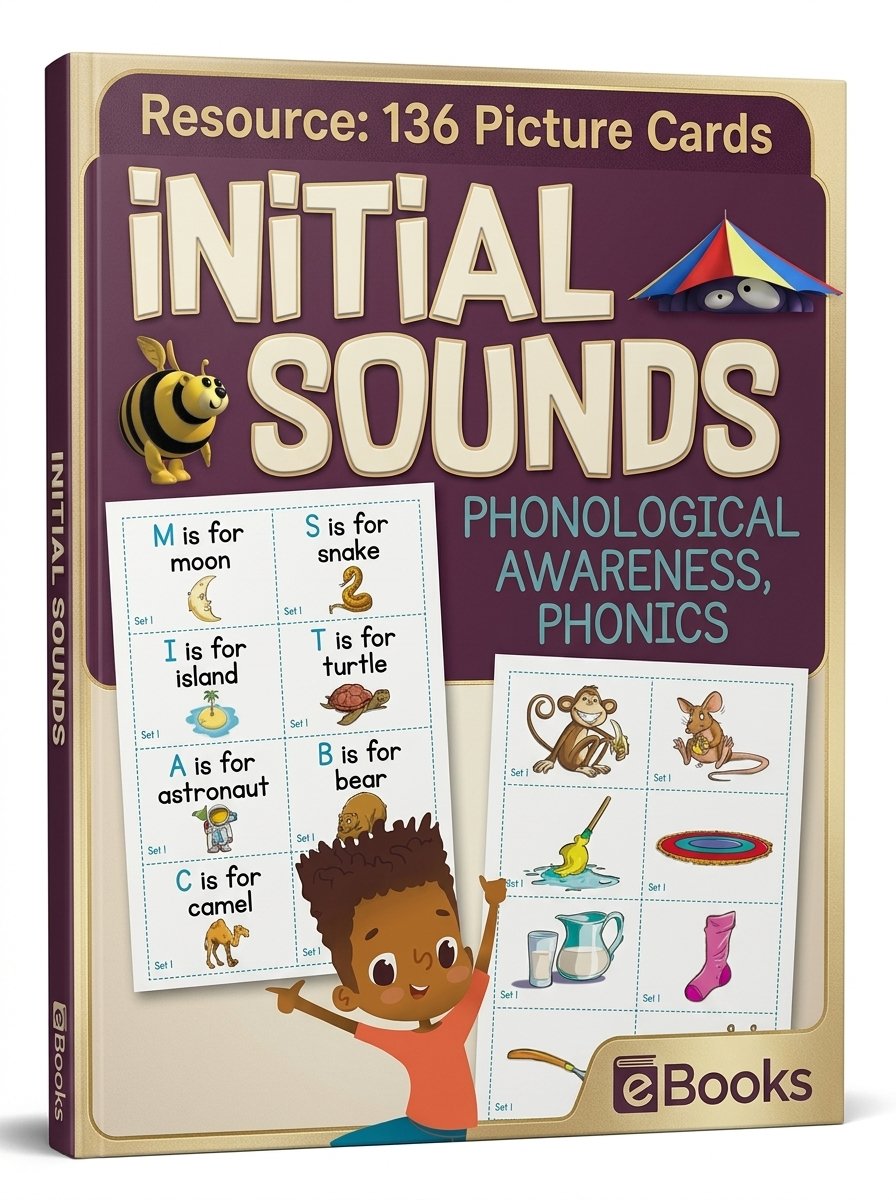
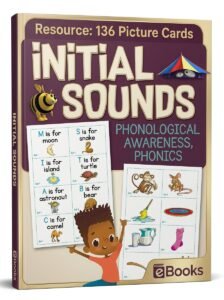
Initial Sounds Picture Cards are a proven phonics tool that pairs letters with vivid images to build early reading skills. Perfect for preschool and kindergarten learners, these cards support phonemic awareness by connecting sounds to symbols. In this guide, discover how Initial Sounds Picture Cards boost literacy, align with modern search and answer engines, and offer a multi-sensory learning experience.
Why Initial Sounds Picture Cards Boost Early Literacy
Initial Sounds Picture Cards turn abstract letter sounds into concrete visual cues. For example, a card showing “A” with an apple helps children recall the short /a/ sound. This method strengthens memory retention and decoding ability, forming the foundation for blending and segmenting words. Teachers and parents use these cards for quick daily drills, games, or sound-matching activities. Research shows that multi-sensory approaches—seeing, saying, and touching—accelerate phoneme recognition. By integrating these cards, young learners gain confidence and reduce reading delays. They are ideal for RTI interventions, homeschool settings, and classroom literacy centers, ensuring no child falls behind in sound mastery.
How to Use Initial Sounds Picture Cards for Phonics Games
Transform learning into play with memory match, “I Spy,” or sorting games using Initial Sounds Picture Cards. For a simple activity, lay out three cards and ask the child to point to the one starting with /b/. For advanced learners, mix cards and have them arrange pictures in alphabetical order. Another effective game is “Sound Hunt”—children find real objects matching the card’s initial sound. These games promote active listening and oral language development. Unlike digital apps, physical cards reduce screen time and encourage peer interaction. Regular play builds automaticity, so kids respond to sounds without hesitation, a critical skill for fluent reading.
Selecting the Best Initial Sounds Picture Cards for Your Classroom
Quality matters—choose Initial Sounds Picture Cards with clear, realistic images and durable, non-toxic materials. Look for sets covering all 26 letters plus digraphs like “sh” or “ch” for extended learning. Avoid cards with confusing visuals (e.g., “giraffe” for /g/ when “goat” is better). Laminated cards withstand small hands and frequent use. Top-rated options include color-coded vowels vs. consonants and storage boxes. Consider card size: 3×3 inches is ideal for small hands. For inclusive classrooms, select sets with tactile elements or braille. Reading the reviews and aligning with science of reading principles ensures maximum instructional value and longevity.
Integrating Initial Sounds Picture Cards with Daily Lesson Plans
Seamlessly embed Initial Sounds Picture Cards into morning warm-ups, transition times, or literacy stations. Start each day by showing three new cards, chanting the sound, and naming the picture. During story time, ask children to hold up the card matching a story’s first word. For writing practice, students copy the letter and draw related images. Assessment is simple: track which sounds children recognize or produce independently. Align cards with weekly letter themes—e.g., “B week” featuring ball, bear, bus. This consistency reinforces phonics patterns without extra prep. Teachers report that five-minute daily drills with these cards raise DIBELS scores and classroom engagement significantly.
Digital vs. Physical Initial Sounds Picture Cards: Pros and Cons
Physical Initial Sounds Picture Cards offer tactile feedback, no battery dependency, and group interaction. They build fine motor skills through handling and sorting. However, digital versions provide audio pronunciation, auto-scoring, and infinite variety. For homeschoolers with limited space, digital cards save clutter. Yet, screen fatigue is a concern for young children. The best approach is hybrid: use physical cards for kinesthetic learning and digital for assessment or home practice. When choosing digital, ensure apps use real photographs, not cartoons, and offer child-safe ads. Regardless of format, consistency matters more than medium. Both types succeed when paired with explicit, systematic phonics instruction.