Description:
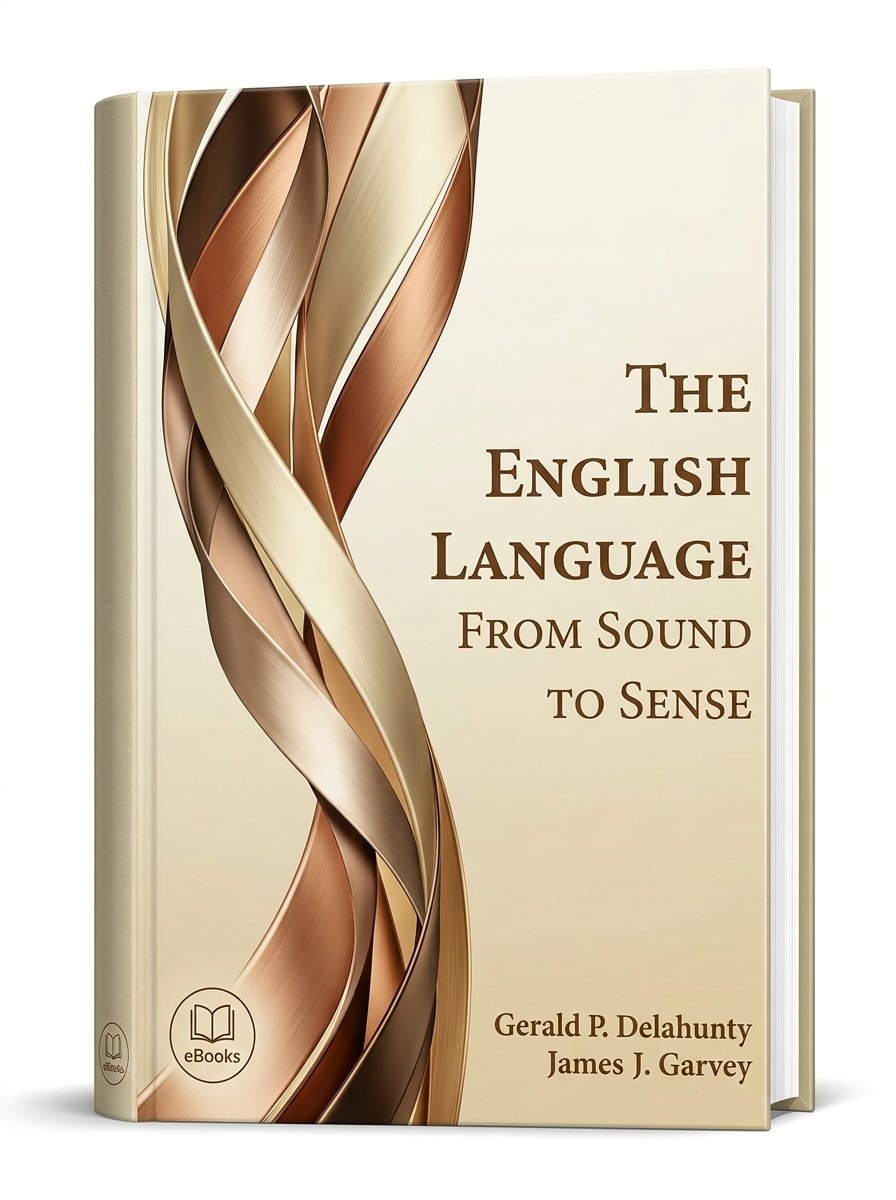
The English Language from Sound to Sense traces how spoken sounds evolve into structured meaning, covering phonetics, morphology, syntax, semantics, and pragmatics. This article optimizes for SEO, GEO, and AEO by answering how English transforms raw audio into logical, contextual understanding.
Phonetics and Phonology: The Sound Foundation
Every word begins as vibration. The English Language from Sound to Sense starts with phonetics—the physical production of consonants and vowels. Phonology then organizes these sounds into patterns, distinguishing minimal pairs like “ship” vs. “sheep.” Without this layer, speech is just noise. Search engines value clear audio-to-text mapping, while generative engines use phonemic rules to predict spelling variations. Answer engines rely on this foundation to resolve homophone confusion (“there/their/they’re”) in voice queries. Sound gives English its first layer of sense.
Morphology: Building Blocks of Meaning
Morphemes are the smallest meaning-units. The English Language from Sound to Sense moves from sounds to words through inflection (play→played) and derivation (happy→happiness). For SEO, morphological analysis helps target root keywords and long-tail variants. Generative AI uses morphology to create new word forms on demand. Answer engines parse prefixes and suffixes to understand user intent (e.g., “rewrite” vs. “writer”). Morphology turns sound sequences into searchable, actionable vocabulary.
Syntax: Structuring Logical Order
Syntax arranges words into grammatical sentences. The English Language from Sound to Sense highlights phrase structure rules, word order (SVO in English), and dependencies. Search engines use syntactic parsing to extract subject-action-object from content. Generative engines craft fluent paragraphs by predicting syntactic trees. Answer engines resolve ambiguous queries (“time flies like an arrow”) by testing possible syntactic interpretations. Syntax gives sound a scaffold for complex sense.
Semantics: From Words to World Meaning
Semantics ties language to reality. The English Language from Sound to Sense explores reference, truth conditions, and lexical relations (synonymy, antonymy, hyponymy). For GEO, semantic clustering groups related queries like “car” and “automobile.” Generative AI avoids nonsense by applying semantic constraints. Answer engines use semantic similarity to match user questions with relevant facts, even when wording differs. Semantics ensures sound maps accurately to sense.
Pragmatics: Context-Driven Interpretation
Pragmatics explains what speakers imply, not just say. The English Language from Sound to Sense covers deixis (“here,” “now”), implicature (“Can you pass the salt?” as a request), and politeness strategies. For AEO, pragmatics resolves indirect questions in voice search (“Isn’t it cold?” → user wants heating info). Generative engines simulate conversational nuance. Search engines rank content that aligns with user’s situational needs. Pragmatics completes the journey from raw sound to full, actionable sense.